
Morgan Hawley Ford: Retail Branding, AI Business Strategy, and Fast Casual Dining
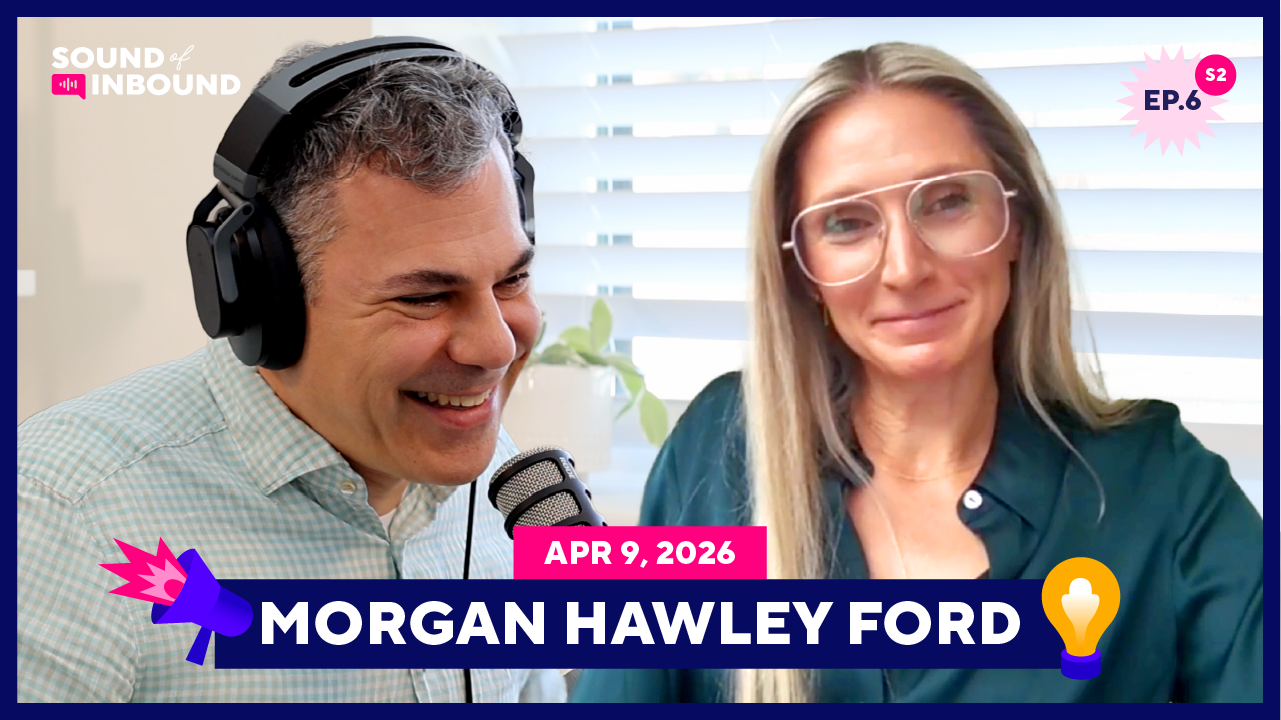
Superwoman joined us on the Sound of Inbound. Morgan Hawley Ford has traversed so many corners of the business world, from McKinsey, to Target, to Vans, and now to Cava. She is a trained actress, an MBA, and a JD.
Above all, Morgan has mastered the art of turning consumer insights into brand magic. In our conversation, we learn about her secret brand sauce (not literally, CAVA!) and some of her best success and failure stories.
Check out this episode on YouTube and Spotify, and Apple Podcasts.
-
Aaron: Hello everybody and welcome to another episode of the Sound of Inbound. I want you to be getting ready to get inspired because our next guest is literally a superwoman of the strategy world. She's an alum of McKinsey. She was a mastermind of growth icons like Target and Vans. And she is currently bringing that magic to CAVA. She is a triple threat, like a true triple threat. And that's not just because she's a trained actress, but because she holds two bachelor's — I think a bachelor of science and a bachelor of arts — an MBA and a JD.
So be careful what you ask for today because she really knows her stuff. I mean, with a name like Ford, which is literally her last name, and she might not be any relation to them. She basically is born to live the brand. So I want everybody pleased to welcome our next episode of Sound of Inbound. Here is Morgan Holly Ford. Morgan, thank you so much for joining us.
Morgan: And an NRA. Thank you for having me, I'm so excited to be here.
Aaron: So first off, is the last name Ford any relation to the family Ford?
Morgan: No, the last name Ford is actually a made-up name. So my mother-in-law was a model and her last name was not Ford and when she entered the modeling world she changed it to Ford so that it was easier for her modeling career. So there's an ironic story of this — the only person who legally had the name, or the first person who legally had the name Ford in our house, was actually me because my husband had a hyphenated last name.
Aaron: Oh my God, that is actually really remarkable. We got to brand ourselves, right? So like that's kind of the way they connect at all. Isn't there a Ford modeling agency as well though? Was that why she also named herself Ford?
Morgan: There is. But she was very British, so this was not here.
Aaron: Okay, all right, got it. All right, first off, just in all transparency, I've known Morgan for more than a year. I actually don't want to say how many decades I've known Morgan. And I think the first thing I think we both have to talk about is Lake Livin — Lake Livin on the beautiful waters of Lake Minnetonka and or the surrounding area. So first question I have for you Morgan, because I think everybody wants to get to know you a little bit is, how was life growing up around Lake Minnetonka?
Morgan: Growing up in Minnesota is like the greatest thing ever. Except that it's really cold all winter long. My husband grew up in Los Angeles and the first time he visited Minnesota he was like, I had no idea. It's so green. And his quote was like, he grew up doing graffiti and skateboarding and we grew up like skinny dipping and ice skating. And he was like, that's what you want. Like you want to grow up in this adorable little community with, you know, Licks Unlimited ice cream shop and being on the lake all summer.
Aaron: That's right. So for those that don't know, Morgan and I both grew up — or I went to high school — in Minnesota, in the Lake Minnetonka area. And for those that have ever heard the name before and wondering why they heard of it, it's because of maybe Prince, because he has Paisley Studios there and his parents actually lived in that area and he hung out in the Lake Minnetonka area. And also Jimmy Jam, the producer of many albums, including a lot of Janet Jackson's work, also lived on Lake Minnetonka. So you might have heard of Lake Minnetonka because of that — or wasn't it Tonka Moccasins? Isn't that another thing too?
Morgan: Minnetonka Moccasins and Tonka Trucks were all from Minnesota. Yeah. Infamous, really.
Aaron: And Tonka constructs. So the area is famous and a beautiful place to grow up. So I thought, when we were getting ready for this podcast today, I think about a lot of folks in my life that had a lot of focus. And then I try to compare it to myself because there was a TV show on for years called — God, now I'm going to forget the name — Quantum Leap. Quantum Leap. And this person got to live a thousand lives. Like they got to jump into people's lives and try all sorts of different kinds of careers. And I feel like in a parallel I've had that way too. I've worked and studied through so many different industries. And you are a serial student and have worked in so many industries as well. And so I thought maybe we could talk a little bit more about your origin story and your perspective on learning. So first off, you have a lot of degrees and I think you love education, right?
Morgan: I honestly love learning all different things. At one point someone gave me like a list of classes you could take and I was like, can I take them all? Can I just take them all? Because yes, I'm fascinated by how the world works and how people work specifically.
Aaron: What brought you from starting off with — did you start with a Bachelor of Science or Bachelor of Arts — and brought you all the way through to a JD? Give us that journey.
Morgan: Well, it's a long story. I started actually as a pre-med student because I liked science. And when I got to college, I ended up changing my major to being a theater and psychology double major. I think a lot of that is really about liking people and wanting to understand why people do what they do. I'm just really a wild extrovert. And so the passion for humanity was part of that. I worked in film and television for a while. I think I learned what that industry was and kind of that I actually like to have a lot more control of my life than that industry often provides. I went back to law school. I was really interested in just learning. In law school, you learn contract law, you learn wills and trusts, and you learn property, and you learn all kinds of things that are actually really useful in the world. They say law school is a mile wide and an inch deep, and that's exactly how I like learning. I want to learn a little bit about everything. But then when you go to practice law, it's a mile deep and an inch wide — and that is not how I want to operate. I'm too curious to just sort of sit in one lane. So I took an entrepreneurship class when I was in law school and I fell in love with business and the idea of putting your thoughts into the world in the form of a product and really getting that consumer feedback. So then I took the bar and was like, yep, never gonna do that again. I ended up working at a marketing company for a few years, producing commercials and really understanding the AB testing side of the marketing world. And then I knew I wanted to go back to business school. So I went to business school. I loved business school. Shout out to University of Minnesota and all of my people at Carlson. Loved every minute of business school. Really knew I was going to go deep on strategy. Knew I really wanted to be a part of consumers' lives. And so I joined the consulting world. I joined McKinsey after business school. I worked in their consumer practice. So I really had great exposure to retailers and brands and kind of how are they thinking about things? What problems are they trying to solve? Where are they stuck and how can we think about it? And then from there, I left McKinsey, I went to Target, had the privilege of working on the apparel and accessories business at Target, loved standing up a number of new brands there.
Aaron: You will get to that. I think the big thing is you kind of just dropped it lightly that you then, after you finished going to school, you just went to McKinsey. Not everybody could just go to McKinsey. So was that in your goal? Like, was that in your sights to say this is where I want to end up? Or was that something that just kind of happened more spontaneously?
Morgan: I wanted to go into consulting before I went to business school. I knew it was — again, that craving for learning and curiosity. The idea that you can be exposed to a number of different industries is really project-bound. I like tangible outcomes. I like something that is different at the end than it was at the beginning. I don't want to be a long-term operator of something that is very routine. I would jump off a bridge. It's just not interesting to me. And so the idea that you can work in really deep problem-solving on these projects and just be constantly learning was really attractive to me. So I did know I wanted to be in consulting — I didn't necessarily know it was McKinsey, but I knew I wanted to be in consulting before I went to business school.
Aaron: It's one of these — I think marketing in general is one of those careers where you can explore a lot of different types of styles of working and brands and industries you can work with. It's a transferable skill, in other words. But I'm wondering, what is the theme for you that makes you feel like working in markets like this is worth it? So all that education, all that learning that you've done, you've now found yourself in — I guess we'll call it — a strategy position. Would that be correct?
Morgan: Yeah, I lead strategy for CAVA, yeah.
Aaron: So do you see that it leans more on the marketing side than it does really on the business side when it comes to where you've now ended up?
Morgan: So I think of my role as one looking at what are the business opportunities in the world? So just looking at the numbers — where are we under-indexed? Where should we be going? But I worked on consumer insights at Vans. I'm working on consumer insights here. All brands and businesses that serve consumers have to deeply know their consumers. What is working for them? What are they struggling with? And that's where that deep empathy and curiosity comes from for me. And then trying to solve that problem — what are we properly positioned to do? What can we as a brand serve these consumers from a position of authenticity? And so some of that's marketing. I work very closely with marketing. I work very closely with product because I get to say, here's where I see the opportunities. Here's what the consumers need. Here's what I think we can bring. But I don't do the marketing. I don't write the creative. I don't place the media. So I have to work with them really closely to say, if this is the problem, what do you think? How can we best talk to them? And the same thing with product — I can say, this is the problem we're seeing. What can we make from a product side? Or what can we make from a food standpoint that will actually serve this need and drive the business forward? So I work so closely with marketing and product all the time. Don't ask me to do media mix modeling, please.
Aaron: You mentioned a specific word that's pretty important. You mentioned authenticity. And I was only in Minnesota for four years, but there is a quirkiness to the Midwest. And I'm just curious if you feel like when you're working with these brands, if you feel like you're kind of imposing upon some of your own personality and maybe quirkiness — that we both have from coming from the Lake Minnetonka area — on all the brands that you work with. Do you feel like that personality is kind of making its way through? I feel like that quirkiness is what makes brands unique. So I'm just curious if you find yourself applying your own personality.
Morgan: I think you have to. One, I've been privileged to work for brands that I think really align with my values and the things that I care about. So when I worked for Target, their purpose was to help all families discover the joy of everyday life. And like, who can't get behind that? That's such a beautiful notion. How can we help families discover the joy of everyday life? That's incredible. And at Vans, we were really focused on what they called the expressive creator — we used to call it the misfit circus a little bit. Who are those kids that feel like, I'm not Nike and I'm not Adidas, where do I belong? And so this opportunity to really support kids in defining their own identity and coming into their own. And quite frankly, we're all kids in that way, right? We're all trying to live up to our potential and be who we really are in the world. But that was Vans' place — really help those people find their community and the place where they're going to be loved, essentially. And now at CAVA, welcome to our table is a quote you hear all the time here. We're all about bringing heart, health, and humanity to people and to food. And I cooked through an entire cookbook. The way we made all of our friends in our 30s was hosting people at our house. And food is so integral to how we connect with people and how we learn about people. So I've been really privileged to be at brands that resonate with me in that way. I don't think I could work for brands or companies that I don't believe in. But to your question about do you do that — you have to know your consumer really well. And you also have to accept that I'm different from my consumer. Like I work in the retail business. They don't. I have two kids. Maybe they don't. I am privileged to have all this education. Maybe they don't. And so how do you empathize really deeply with them and stand in their shoes and learn what they need to best serve them? At Target there was a quote that was, you are not the guest. Like you are not the guest. It doesn't matter. Like you can be like, I don't like this thing. It's like, I don't care. You're not the guest. We would laugh at Vans because the board would often be like, I don't see anything on this wall of shoes that's for me. And we're like, yeah, because you're a 60-year-old multimillionaire. You're not like a 14-year-old skateboard kid. It's not for you.
Aaron: You're not the target market. Literally.
Morgan: You are not the guest. It's not for you.
Aaron: Right. Well, here's the thing — growing up, I used to be really starstruck by certain brands and would have felt like, oh my gosh, it'd be amazing to work with some of these shoe brands or some of these big retail organizations. But after a while, after I've been in the industry for a long time, I don't feel as starstruck. So I'm curious for you, what does make the job? Is it getting a chance to work with these famous brands? Is it the people? Is it a little bit of both? Is it more than that? Is it the audience? Tell me what really makes that job feel worthwhile.
Morgan: I think for me, it's really helping something or someone live up to their potential. Vans was in a turnaround while I was there. There was a lot of struggling, but there was so much opportunity. Even when I joined Vans and it was doing really well, it was always like, this brand could be so much more and it can mean so much to people. Having the opportunity from a brand and business perspective to unlock that potential and really serve people is just really meaningful to me. And I think CAVA is the same way. We're on a rocket ship. There's so much growth happening here, but it is really the purpose of the brand to bring people together, and that mission is something I really believe in and really excites me. I mean, Aaron, what motivates you? What brands were you starstruck by, and are you still?
Aaron: Well, I'm not starstruck by any brands anymore. I think it's because it's all perceived value to me. I don't have to feel like it has to be a specific brand. I think the quality of it — I actually like to find brands that are completely unknown, but the quality is extremely high and they should be further appreciated. And maybe they're not because they don't have that kind of awareness in the world. But yeah, I used to love that. I mean, growing up, of course, Nike was a big one. And nowadays, people are always fascinated by Apple and what they're doing strategically. If I got to work for these businesses directly, I don't know if I would feel as starstruck. I don't want to drop names, but I am currently on a small business advisory council for Google and I am getting to hear and see what's happening with Google Workplace. Actually, the head of UX is going to be on our podcast at some point soon. But there are things that I'm like pinching myself that I get to work with these brands, but these are just people. They're all just people. They get really amazing opportunities and they get lucky to get involved in certain organizations that are on a rocket ship. But personally, no, it's not about being starstruck by the brand anymore. It's about the mission for me. And the work that we do here every day with our organization is all in life sciences. So I'm always very excited — like you are too — when I talk to organizations that have a very clear mission and they know their audience so well. I really want to be on that rocket ship. I want them to connect their brand to the right audience and see what kind of impact they can make, especially in healthcare, especially in life sciences. I'm actually traveling to see an event called Rare Disease Day in just a week or so. And it's talking about how gene therapy is impacting the lives of children and adults that have rare diseases. And it's remarkable seeing what the science can do these days. So for me, it's like I like to get on that kind of brand bandwagon. There's some things that I do think these days that I would have loved to growing up, but I'm no longer so excited purely to be working for some major brand. It's the people for me. It's always about the people no matter what they're working on. I always feel like that's what really connects me to the overarching mission.
But for you — you've had, like me, this very curious streak. And you told me some fascinating stories. I think maybe you should share with everyone this Target story about going into the store and realizing that the accessibility of some of the food really wasn't there and the messaging didn't really align with the food and then the pricing. Tell us about that story again, because I thought it was remarkable about how deeply you get into your work and how much you really want to understand and live that brand so that it can be successful. Go ahead.
Morgan: Yeah, so at the time the executive leadership team, when we would explore consumer insights and strategy, we would send them on these missions — whether that was a back to school mission and what they needed to look for, or sometimes we would send them to competitors to try to understand what does this look like. But one of the insights we had was that our consumer was spending about $12 to make dinner and they're making dinner for four people. And really the insight was they want to make a dinner they're going to be proud of. They're serving their family. They're taking care of their kids. This is not a ramen situation or scrambled eggs — they're trying to make a dinner that they're proud of. And we sent the woman who was our head of marketing into a Target store and the story she always tells is she was like, I'm going to make this pasta dish and I either want to use the organic chicken or I could use sausage. And she's standing there and she really wants the organic chicken because that's what she would be proud of, but she looks up at the signage and the sign says "make good choices." She was like, my God, I hate that sign. And then she was like, I approved that sign. That was a sign that came across my desk and I was like, yes, make good choices. All it's doing is giving me shame and guilt. And she was like, never again. Never again will I look at it the same way because I know what it feels like to stand there with $12 in your pocket and be like, I can't afford that thing. I can't do the thing. I can't deliver on the promise that I'm trying to deliver for my family. So yeah, I think standing in the shoes of your consumer is huge.
Aaron: Yeah, absolutely. And it gets back to the point that if you don't have alignment between the written identity, the visual identity, the messaging strategy, and the actual execution of it all, you can really miss the whole point and not reach anyone. And of course, did they fix it? What did they do?
Morgan: Yes, she did. I'm tempted to say that she actually pulled the sign off the wall in that moment — like she was like, no, you're not doing this anymore. I don't know if that's true, but I could see her doing that.
Aaron: So you mentioned earlier that there was kind of an ethos for Target. Would you call — we call those things like a brand ownership idea — was joy the word you used? Was that the brand ownership idea for Target? It's discovering the joy of everyday life. So if you had to really encapsulate that in a word, is it about accessibility? Is it about enablement? What do you think that really comes down to?
Morgan: So let me tell you how it was built. Company culture is really an outshoot of people expressing their values. So every decision you make, you're making it based on your values. Do I need to be efficient and move really quickly? Or do I need to include everyone and invite everyone — do I need to go one on one with everybody to have this conversation? What do I value and how am I going to make those decisions? So one of the things Target did was we did a value sort and we had every single person actually sort through 30 values and say, these are my top five, these are my top ten, these are the bottom ones. And the thing that was so remarkable at Target was something like 90% of the people who worked at Target had the same five values in their top ten. And those values were altruism, equality, relationships, learning or discovery, and happiness.
And so they took those five values and that's how you get to — help, altruism — equality, families, relationship — discover, learning, discovery — the joy, happiness — of everyday life, which is where Target plays, everyday life. So their purpose came completely out of the values of every individual at Target. Now they're a wildly aligned organization. And I would say at CAVA, we have values that the founders wrote and built and are true, but as we hire people I don't know that we're screening for their values, so the culture may change as you continue to bring different people into your organization. But I think Target had a very unique opportunity there because it was so aligned.
Aaron: Yeah, I love how you've found a way to take what strategy you guys were coming up with in the boardroom and then figure out a way to make that translate into the real world. A lot of folks just feel like they work in that vacuum and it never really does translate, and a lot of that work is never going to be seen or felt. But you found a way to connect that — that's very, very important. And we try to do the same thing. I think a lot of folks are trying to figure out the way to make a brand sticky, which is what I want to talk to you about right after our break. But it's fascinating all the things that you guys have done, especially with Target, to figure out ways to get in the head of the consumer. So one of the things I would like to talk about — and I will do it right after the break — is really how do we translate some of these things to make brands really, really sticky? And I think there's always some fascinating things happening, like for example — maybe this happened at Target too — you go into a grocery store and they want you to be lost. They just want you to be totally lost. So I guess I'm going to buy this next thing. And then all those little interactions that happen between the moment they walk in and the moment they walk out, you're trying to impress them to make some additional decisions they didn't really know that they wanted to make or should make, and making that really a sticky kind of experience and making them want to come back. So I'm always fascinated on the retail side — and I guess also with restaurants — how do they make that experience feel sticky so people do want to keep coming back for more and more? Are you up for talking about that after the break?
Morgan: Can't wait. Very excited.
Aaron: Hello everybody, we are back from our break here on the Sound of Inbound. I'm with Morgan Holly Ford — again, no relation to the family Ford. She is her own brand, I'll tell you that. She is unique in the world of superwomen, as I was saying earlier. We were talking about brands and what makes brands sticky. And right before the break, I was mentioning to Morgan that in the B2B world, there's a lot of jealousy around how B2C companies work. I've told Morgan that I've run dozens and dozens of discovery sessions, and everybody — when we ask them this very important question, what brands do you love, what brands do you admire — they never mention another B2B brand. They always mention a B2C brand. And it's either something very nostalgic from their youth, like for me it was Yoo-hoo at one point, or they mention something very modern like Apple and Google and others. And they're looking at these organizations because they're trying to figure out what makes brands really connect emotionally and be so sticky and want people to come back for more.
So Morgan, I put it to you — you are squarely in this space and you obviously had some impact at some big, big brands. From your perspective, what does make brands sticky?
Morgan: I think the one answer is emotional connection. It's not just that it's a singular product or that it's solving a thing for them unless that thing is a real problem for them. It's the emotional connection that they feel to whatever that brand offered them. And that can be — at Vans, I would say the emotional connection was many people found either Warped Tour or skateboarding. And these were spaces where they found their people and they found their community. And Vans is so inextricably tied to that experience at that time in their life that it becomes this very nostalgic emotional connection. I think people find an emotional connection at Target where at the time it was like, I go in and I get my Starbucks and I have a minute to myself. And yes, there's some inspiration — what am I going to find? But I'm also going to feel really good about the Tarjay experience, right? I got it for $5, kind of thing that is unexpected. And so there is an emotional connection and a little bit of identity tied to some of these brands that are really sticky.
Aaron: Okay, I just remembered something about Target that I got to talk about. On social media, there was this kind of a joke going around about men saying they have to go run some errands. And the women that are in this scene in the house — they're on the couch or they're taking care of a kid or they're cleaning dishes or they're putting out a fire, whatever it is — if the husband said they were going to Target, they literally dropped everything and were right there with them. It was a really funny meme, basically. It was like, you're going to Target?! I'm coming with you. Like, you know — did you guys ever play that out? Because that would have just been the best. That is just such a hysterical thing, that women would have dropped literally everything to just go and hang out at Target.
Morgan: I don't think Target ever did anything with it, but I've definitely seen all the memes of like, Target is my happy place. I will tell you a personal story — there was a day where, for whatever reason, both my husband and I ended up at the car wash and I had one kid in my car and Alex had the other kid in his car. We went through the car wash and they wanted to get in my car. Only my son had a complete meltdown — like a complete, he was throwing his shoes at me while I'm driving — complete meltdown. And by the time we got home, we pulled into our parking spots, I got out of my car, got in his car, and he was like, what is going on? I was like, I'm going to Target. And just left. I was like, I can't. I need a minute. I'm going to Target. And he was so confused as to what was happening. But yeah, there's a little bit of like space and breathing room and inspiration and joy that you get from walking the racetrack at Target for whatever reason. Do you know what I really think it is? What I really think that is — it's fun, but also I'm getting shit done, right? And as a mom specifically, the idea that you can enjoy yourself and get shit done is like the correct intersection of emotional connection.
Aaron: Yes, absolutely. I get that. And this is going to age me for sure — Target, I believe, was a venture of Dayton Hudson. Dayton Hudson was a brand in Minnesota, actually, and the neighborhood I lived on at one point was a Dayton farm. That was pretty incredible. The entire place was actually owned by that family and then eventually split into plots and we ended up living there. When I talk about the origin story of Target though, what's interesting is it went from kind of like a quasi-bougie department store into this more accessible competitor to a company like Kmart or Walmart. But it was the cool one. It was the cool cat of all the other organizations trying the same kind of thing. And it was partly because it was born out of this quasi-bougie department store that was rethinking the format. And for some reason, to this day, I still feel like that's still in there somewhere, woven into their DNA. I don't know really how or why I feel it that way, but maybe it's that fun part you're mentioning.
Morgan: Part of it is because they were always on trend and they've done a really good job with partnerships and collaborations to stay relevant in fashion and at home. Style is a major differentiator for Target versus Walmart or Amazon. Style is their place.
Aaron: Yeah. Okay. Well, if we had more time, we would talk about some of the style brands that you actually launched at Target too, but we need to go on because you did that yourself. Didn't you launch an activewear brand at Target? Wasn't that something that you did?
Morgan: I did. All in Motion, which was their performance apparel brand, was my baby.
Aaron: It's still out there today. Yes?
Morgan: It is, yeah. So Target originally had a licensing agreement with C9, and as we started to see the performance of the C9 brand wavering, performance apparel everywhere else was just thriving. Like Lulu was growing. Aloe didn't really exist yet, but just performance apparel and athleisure wear was just exploding. And for whatever reason, C9 wasn't winning. And so we found an opportunity to stand up an own brand. Target had several own brands at the time. And really the learnings from the early own brands like Cat and Jack, which is their kids brand, was really listening to the consumer. And so we went and we did all these focus groups and even the name itself was a nod to one of the consumer insights — All in Motion. It's not about Nike super hyper performance. It's about just go outside and move. And all of you, everybody, because it wasn't about I'm an athlete or I'm not an athlete. It's just everybody just wants to go outside and move and be happy. And so much of that brand was built on this idea that it was going to be kids, women's, men's, extended sizes, joyful, bright color. And no, it wasn't going to be the most performance technical apparel — that's not what Target plays. It's not what people expect of it. But it's going to be high quality, beautiful fabrics, at a price point that everybody loved. And so when we launched All in Motion, C9 had been declining — I think at the end it was around like 800 million — and when we launched All in Motion, it launched at a billion dollars in the first year.
Aaron: Whoa, those are big numbers. Those are huge numbers. Well, when you're working at that kind of volume, what do you think — we talked about this in previous conversations — that brands should take a position. And it sounds like that active lifestyle is a position. Having an opinion, I feel like in our own personal brand is important if we're going to get out there and be engaged. So how important is it for a brand to have that kind of level — to have an opinion, have a personality — in order to be successful? I'm assuming from your perspective, it's very, very important.
Morgan: I do think it's very important. I think a brand has to stand for what they believe in. I think that is rooted in the values of the brand itself and bringing those values to life for the consumer. I mean, if you're thinking about the political landscape and the opportunity to stand for some of those things, I think it gets challenging. There's a space where you have to stand for it. I'll give the example of REI. REI is always about outdoor spaces and supporting people who want to get outside — like, don't buy into Black Friday, just go outside with your family. So when public spaces are threatened, if REI doesn't say something, they're not really living up to their own values and doing the thing that is core to who they are as a brand and what their consumers expect of them. It gets difficult because I think in this climate, this social climate, people saying things — it's automatically assumed it's greenwashing or it's performative. And then there has to be something you do to back it up, and then it's never enough. You spoke for this issue but not for this issue, and it just gets very, very complicated from a brand perspective. But I do think if the core of your brand is threatened by some external activity, you have to say something or you're no longer being authentic to who you are as a brand.
Aaron: So in the world that we work in all the time, we value inbound marketing as a method to build trust. Is that kind of strategy used also in the consumer markets world? Do you really think people are out there trying to build thought leadership in certain spaces to gain an audience and get them to trust them in retail?
Morgan: I think the good people are. I think the good people are really thinking about long-term value and how do you serve consumers in a way that is real. I think there's plenty of people out there trying to exploit consumers and get what they can and say what they want to say to curry favor or to gain sales. What do you think? Where do you think it is?
Aaron: Well, I was going to say the power of retail. So right now we're watching the Olympics and I'm glad I don't actually know the brand name, so we're not just going to pitch them right now. But all the folks that are on the ski hill doing any of these Alpine sports — or at least the Americans — are wearing a very specific brand that has a woman and a man sitting back to back to each other. And it's very iconic. And it's on everything. It's not Nike and it's not Adidas. These are just one specific group. Now I'm not really a skier, but it's now showing up in so many places and I'm curious about it. So I'm guessing, in a way, that's again something B2B is extremely jealous of. You know, like all you got to do is slap a logo on something and people are immediately like, what the hell is that? I want some of that too, because it's being applied to a famous person or it's in a very high-performance sport. What I'm getting at, Morgan, is that all the work we think about around inbound marketing seems to just completely melt away when you see a brand that can get away with just having a very famous person wear a logo and then that immediately sells things. So I kind of wonder about the balance for you too. What do you think?
Morgan: I think there are, but you have to back that up. So you can do that and raise awareness — you're raising awareness, consideration — but will they actually purchase? You're going to raise awareness. But then are they actually going to be considered, and are they actually going to buy? And you said this in the very beginning — you're looking for brands that have very high quality, right? If you see a celebrity that you like wearing something and then you go to buy it and it's outrageously expensive and it's a piece of garbage, you're not going to buy it. You're going to be disappointed. Or if you buy a piece of performance apparel and you wear it twice and it starts falling apart, you're going to be like, this is trash. And so all of that awareness and additional sales — if you're not backing it up, you're just setting yourself up for failure. I mean, it's sort of like the same thing with entrepreneurs if they get into retail too early and they have to create way too much product. If they don't sell it, they get kicked out. Now they're stuck with all this inventory with nowhere to go and nothing to do. So it is all about timing. It's all about the actual quality of your product as well. It can't just be you slapping a sticker on something.
Aaron: Yeah, exactly. And maybe this is kind of where it translates into the work you're doing now, because you're going from something that can be purchased and worn all the time, where you're experiencing it all the time — and is it quality enough that you want to refer anybody else to the same brand, want them to buy it as a gift? And now you're moving into something quite different with CAVA. And I'm curious, just from your standpoint — is it considered, I looked it up before, Morgan — is it considered the category of limited service restaurants? Is that what CAVA works in?
Morgan: Fast casual. Yes, we consider ourselves fast casual. But yeah, how you separate restaurants is a little bit nebulous, but yes, fast casual.
Aaron: Fast casual, okay. So people don't walk around with CAVA logos on them, you know. But there are brands out there, especially fast food brands, that have hit a certain echelon, maybe emotively — like an emotional apogee of a brand — where they don't have to slap logos on everything. You just kind of say, I know if I go to Chick-fil-A, the line is going to be long. And I'm curious, how do you take some of that retail experience that you've been working on and bring it to this fast casual world?
Morgan: So it's still the same, right? You have to serve something that a consumer needs and wants. And I would argue the quality and the experience matter even more because there is so much competition for where you're going to eat. You could go to a grocery store, you could eat at home, you could order on DoorDash. I mean, my CAVA is next to 17 other restaurants in my little planned community neighborhood space, right? So there is a reason you're picking CAVA, or you're picking Chipotle, or you're picking Chick-fil-A. And part of that is they've delivered on their promise. You didn't walk in and have a messy restaurant with bad service and terrible food. You do that and — the thing about restaurants is — you do that once, they're never coming back. I've bought Nike sweatshirts where the zipper falls off. Guess what? I still buy Nike sweatshirts. But you have one bad food experience, you're out. Why would you come back?
Aaron: Is that because it could impact your health? Is it because there are just so many other options? Why do you think the stakes are so much higher?
Morgan: Because I think the restaurant industry is probably one of the longest-standing businesses in human culture. There are just so many options and the evolution of what we eat and what we pick — there's just so many choices. There's always a new restaurant. Dave's Hot Chicken did not exist where I grew up. It did not exist in Minnetonka. I bet you there's now Dave's Hot Chicken in Minneapolis somewhere. The restaurant industry is just evolving and there's so many choices that people make every day. You're missing out on — well, there's only so many pairs of shoes someone buys in a year, right?
Aaron: I got to share this really quickly. I was in — I never go to Starbucks. Sorry Starbucks. I'm not a coffee drinker. However, recently my sister was here visiting in North Carolina and she and her family are all into Starbucks. They even said before we go visit your daughter at college, can we stop through Starbucks because my son needs breakfast? I'm like, what the heck? Point of all this is — I was in the drive-through and when I pulled up the drink menu, which I'm thinking in my head, I don't even know what a grande is — I wish they would stop calling it that, just call it a medium — they had protein and other types of shakes and coffee drinks that were like infused. And I was like, what is happening right now? I think I even saw Pepsi on a commercial for the Olympics had a probiotic or something in their drinks. There is a big transition that they're trying to have happen. I'm not sure if it's going to work or not. It's kind of like when Panera stopped making French onion soup and everybody started riding in the streets and burning buildings down. I had no idea what to do with myself. Should they try to imbue that healthy lifestyle, or should they just own it? What do you think?
Morgan: I think it's a real question when it comes to how do you evolve and how do you innovate to continue to serve the moving consumer? And yeah, you're going to make some stuff that's not going to work. I mean, think about like the Atkins diet. Do you remember when it was like everyone's just eating meat all day long? And then the guy died of like a heart attack? I was like, yeah, well of course he did, because he lived on meat. But I think there's a little bit of they're trying to stay relevant. They're trying to stay with their consumer but they don't know what's going to stick. And the hard part about like a publicly traded company — I'll give Lululemon, sorry Lulu — Lulu was on a rocket ship. They grew and grew and grew. And then as a publicly traded company, you start getting obsessed with the fact you have to have growth year on year on year on year. But if you've tapped out your market, where do you go? And so Lulu started — I don't know, two years ago I walked in and I was like, there's a silk pleated skirt at Lululemon. Why? There's a men's work blazer at Lululemon. Like what is happening? But they start losing the thread because they're told we have to grow, we have to grow, we have to grow. And you do end up with Pepsi probiotic — like really? What are we doing here? This is not even the same thing anymore. But they're trying to continue to grow and not die. They're struggling to stay relevant in any way they possibly can. And ultimately consumers know. Consumers sniff it out and are like, what is this? And it's a mess.
Aaron: Yeah, right away too. And you wonder, were they asking anybody?
Morgan: Growth. They were told to find growth. They were told to keep growing. You had 4% comp last year, you need to have 4% comp this year or higher. And so they just try to make more. More is more, right? So Starbucks, I think, is trying to find their relevance again, figure out what works. They know consumers are moving towards something, but I don't know if it'll work. Like, I don't know if that's the right answer or if they're going to get laughed out of the room. But maybe it's genius. Maybe, who knows?
Aaron: Well, I've got — again, I'm back to the smaller bespoke brands that I like. The exclusivity of it. And I like that it's small batch. Not to say that it's just for bourbon, okay. But I mean, there are brands that just own it — what we do is good enough that we'll always have a good base and we don't need to just keep growing and growing and growing. I actually prefer those organizations that just kind of own the fact that they're at the right size and the right market. Maybe it's the bodega in New York City, Morgan. But go ahead.
Morgan: Let me ask you — what's the tipping point for you? Because I think about this a lot. Like if you're an entrepreneur and you start a brand, you start with this idea — and Vans struggled with this because it was like, is Vans counterculture? Because if you become pop culture, what happens? What happens to your authenticity? Burton struggled with this in the beginning because they were this small snowboard brand and it was this niche thing. They're enormous now. And then they get blamed for selling out. So that's my question for you — when does success actually alienate the original consumer who, similar to you, liked that small brand? Where is the tipping point between being successful and selling out?
Aaron: You have a lot of people you'd have to convince about what I'm about to say, but I have worked for some Fortune 50 companies and I liked it when a pretty famous CFO said to me, he's like, don't worry man, we're a steady Eddie. And I said, what the hell's a steady Eddie? And he's like, it doesn't matter what the government does or what the markets do. We're going to be here. We have contracts that take us out 30, 40, 50 years. He wasn't really worried about the immediacy of tomorrow — he was always looking very, very far out. And I like the fact that he wasn't obsessing over how are we going to grow and grow and grow. They just had this sustainable business. I love that. I wish we could — as an agency, as a services organization, we're always fighting for the next client. But at the same time, if we do our job well, those clients would stick with us. Our hope is a good customer experience would keep us sustainable. And that's what we want to be known for. And it's really, at the end of the day, for all of us — one of our writers famously puts a unicorn in our pitch decks because he just says we're fun to work with and we just want to have an enjoyable experience. That's the kind of endpoint there. So yeah, I feel like the trade-off is, are you willing to have a sustainable brand and put everything you can into that? And that may not always mean crazy hockey stick growth every year.
Actually, did you hear about — I think it was Italy. One of the athletes at the Olympics were hugging this dumpling-looking plushy thing. And it was made by this one small company. I think it's in Italy. I can't even remember the name, but they got crazy orders after this. And it's the same kind of viral hit. And you don't know how far it's going to go, but they're going all in on this and they're opening up another manufacturing arm so they can make enough of these things. And I'm thinking — like you're thinking — it's like, oh, it's a one-hit wonder. We need to do more. But you're serving a much larger audience. So then you're changing the style of your business to have to serve that audience. And then it starts to feed into itself. So you really have to want that if you're going to go after it in that way.
Morgan: Well, you have to know what scaling down looks like, right? You have to know what scaling down looks like. How do I get off this train if it goes too fast?
Aaron: I would love for people listening to actually understand what that means — to scale up and scale down. I don't seem to ever get the scale-down component of it. But here's a quick question I want to get to towards the end of this conversation. You're working in a space right now — I'm curious if there's any impact in the world of retail or in fast casual from AI. Is AI impacting the work that you're doing, either for the consumer or for yourself and your strategy work?
Morgan: Yeah, there's tons of AI impacts. On the consumer side, I'll start there. When you go to search, are you searching Google still or are you searching ChatGPT or Claude or somewhere else? We have a whole search engine optimization strategy now — how are we going to show up? What are our keywords? Well, what are you doing for all of them? LLMs are scraping Yelp. So if you're not delivering a good experience or high food quality at your restaurant, the LLM is figuring that out. And so there is a bit of strategy that has to go into how is that coming to life for consumers.
And then on the back end — and that's just one example from the consumer side — if you knew how much reporting goes into running restaurants every week and figuring out what's going on: inventory management, traffic numbers, labor. All of that is going to be impacted, if it isn't already, by AI in terms of optimization. How do you optimize labor based on weather patterns? We used to joke about this at Target. You can do whatever you want at strategy. If it starts snowing or raining, all of your numbers are out the window. Or if it's too hot, too long, nobody's buying sweaters. So there are major weather impacts that happen, and it happens obviously in restaurants and other retail.
But if you're not paying attention to those things, you're going to have too much labor. You're going to have too many people sitting at work with nobody coming in. And so all of the optimization that AI can do across external factors, your own sales numbers — you can put in what are the promotions you're going to run this week, what are the new launches, what are the LTOs you're putting out — and it can tell you, this is how much you should expect in sales, this is how much you should be forecasting for. So there's just tons of optimization opportunities for AI around reporting, data, analyzing that data, and making some of those business decisions. I think the challenge is it's human business, right? And so you can't let AI do everything.
Aaron: Yeah, there'd be... You're right. There's again a lot of jealousy in B2B because B2C is very transactional. You can see both the positive and the negative of it. But because it's so transactional, you can make some quick decisions and follow up really quickly — like abandoning a cart sends off an email, for example. But when you're working in B2B, the sale is so much longer. The whole time period from the first touch point through to close on a business could be a year, it could be more than a year, especially when we talk about multimillion dollar deals. So the nurturing component is a lot different than just the transactional elements of B2C. AI in our world is impacting all sorts of things. That's why I was curious on the retail side. You're right though about how browsers in general — I've actually challenged people in these conversations that browsers should no longer be called browsers because people are no longer browsing. They're asking. So the challenge with all of that is there's nothing in front of you. You don't have anything to go and explore. So if a person is using Gemini or Claude or the Comet browser or the Atlas browser or whatever tools are using OpenAI, they don't start off with something to go and explore and have them be guided. There's no guiding. And that to me is a very different consumer behavior that I'm not even sure how you guys would even manage.
So is it something like, I want something healthy that's nearby me and I'd like to make sure I can get it for my family so it's accessible and I have allergies? How would you counter that kind of search where it's now making a recommendation, not just a search result? I don't even know how you guys would start with that. Does that start with some kind of seeding?
Morgan: I have a feeling more people are just putting in like, what should I eat for lunch today? Right? I don't even think people are that thoughtful about their prompts. But I hear you. I think if you get to that degree, you're going to get pretty good results if you're really thoughtful about your prompt. But yeah, I think there is a real struggle and you're right — there's not browsing. It's interesting though, because I think several years ago it became that people do not search for products on Google. They search for products on Amazon. I think the same thing is happening with DoorDash. You're seeing people go to DoorDash because they're just like, I don't know what I want to eat. What does DoorDash have? It's sort of this aggregator where you can kind of scroll through — do I want Korean food? Do I want healthy food? But you're right. Once we don't have these places to scroll and you have to instigate that, it is going to look very different.
Aaron: You know, Morgan, I'm known for this. I'm known for giving away ideas. Very good ideas. So I have a good idea for you and your current role. Want me to share with you now?
Morgan: I would love it. What do you got? Tell me what to do, Aaron. Help me out.
Aaron: I'm going to represent men for a minute, but I'm sure anybody feels similarly. We never know what the hell is for dinner ever. And we always want to know what's for dinner. And I don't want to make the decision. I think a lot of women probably share the same kind of perspective — I don't want to have to make a decision. And I've downloaded the exercising apps and the meal planning kind of things and all that kind of stuff. And I've also subscribed to different kinds of services. You still have to make all these choices. And I would rather just tell an organization who I am and what I'm trying to do, and then they just figure it out. I want to keep it interesting, but I just want to be home and I want it to be ready to go. Or I want to know where I need to go and pick it up. And if there was a meal planning thing at CAVA where I could just sign up for it, I could stop by any time and they have what I know I'm supposed to eat because they have my meal planning all set to go, and I can go to any site to do it — that would be insane. That'd be so cool. I just kind of check in and it goes, Aaron's here. This is the meal he needs. And if you're not going to make it back, do you want your dinner too? Yes, I do. Okay, give me my dinner as well. That would be — I wouldn't have to think about it. It's like when Steve Jobs said every single day, I don't want to think about what I'm gonna wear anymore. I'm just gonna put on a black turtleneck. That's what I want from CAVA.
Morgan: I'll see what I can do. I think the fear is you get it. You must have done this though. You order a meal delivery kit, and Tuesday you're supposed to make — I don't know what — and you don't want it. Like, I don't want pad thai tonight. Now I'm doing something else even though I paid for this thing. Then you're disappointed with the service. The problem, the thing you need solved for you, is predictive. Okay, you had pho yesterday. So today you probably want — right? You need that level of predictive merchandising for you.
Aaron: If it was in my personality to say I want that kind of variety. But you know, I worked with one woman once where she did have a lot of allergies and she had created every weekend this salmon salad thing. And that's what she ate every single day. She never wanted anything different. It had to be just that. And some other folks — like the black turtleneck concept — it's just like, no, I don't care. It's going to just be whatever you give me. And it's exactly the same every day and I need to know that because it works for me. But I totally understand that I've done that too — it's like, God, that's what's for dinner tonight, I don't want to eat that.
Morgan: You need to put in all the weather impacts as well. Because it's like, if it's cold, I want something warm. If it's hot, I want something cold. You need that layer of agentic AI to actually help you, right?
Aaron: This is why Morgan — everybody — that's brilliant. Absolutely brilliant. That's exactly why we have you there. It should be impacted by geography and their lifestyle and the weather. I love that. That's amazing. Or guilty pleasure — I mean, that's the other thing. When I was going out for those meal kits, it's like, where's the chocolate? I want to have my chocolate and they never give me the chocolate.
Morgan: Yeah. That feels like such an easy fix. All right, we're gonna work on this, Aaron. I like this idea. I like this idea.
Aaron: Okay, all right. So, last question or two here, because I think this is always really fascinating. When you think about your younger self — and you probably do every now and then — what kind of advice would you give her now, seeing where you are? Because I do see you as being very successful. I know that you've had a lot of other things going on in your life, but your career is extremely successful, and I congratulate you for that. But I'm just curious, what would you tell your younger self now? Would you just tell her to try all these things, or be more specific about her pathway? What would you say?
Morgan: Look, I will joke about this — I have a mortgage on my brain. I will be paying for law school for like the rest of my life. And I do not regret in any way going to law school. There are things where it's like, what would I do differently — I don't know that I would do anything differently. I think I might just tell her it's gonna be okay. Like, that's it. You're gonna be fine. You're gonna be just fine. Because I think there's a lot, especially in your early 20s, there's so much anxiety about — what's gonna happen? Where am I gonna be and how's it gonna work? I had a strong craving to be independent and to be on my own. I didn't want to rely on my parents or stay in Minnesota. I wanted to experience life as fully as possible. But there's a lot of things — like, are you gonna have the opportunities to do those things? And I think that's it. I don't think I would change any of my path. I think being a voracious learner is the greatest thing and it exposes you to amazing people and just great stories. And that's what life is about, right? The high highs and the low lows — that's it. That's what humanity is. But I think there's a bit of fear and anxiety and like, how am I gonna get there, that can really erode some of that confidence and get you obsessed with, where am I going and how am I gonna do this? And it's like, you're gonna be fine. You're gonna be fine. It's gonna be okay.
Aaron: Yeah, the part that I think I don't regret anything either. I'm always curious as far as like what I've told myself — to be more focused. But I wouldn't be where I am right now if I didn't have all those experiences. I'm sure it's the same for you.
Morgan: Absolutely. I think as many people will tell you, it's not the destination, it's the journey. It is the journey and the journey ultimately will get you wherever you're going. Enjoy the ride. Enjoy the ride. I keep saying this right now — this is as good as it gets. This is it. I have two wonderful kids who are at home. I have a great husband. My parents are around and lovely. I have an amazing job where I get to do really fun work. This is it, you guys. This is everything. Just enjoy that moment for what it's worth. And it doesn't mean don't push forward — keep pushing forward. But also embrace it. This is so good. Life is so amazing. Just enjoy that for a second.
Aaron: Yeah, I'm agreeing that you got to recognize what you have. And I tell our team a lot that we should feel very, very fortunate that we get to push pixels every day and not literally have to get into a truck and put out fires. Although some people love to do that — that's their life. But for us, I just always feel like we got to be very aware of what we get to do. And if I did tell my younger self anything, I would say you always get to be creative, Aaron. So try not to worry about it. I think that's the part that would have probably been most useful.
Morgan: You are always creative.
Aaron: Yes, always creative. Okay, Morgan, this has been a lot of fun. I really appreciate it. I feel like we're going to have to have you back for more as we get to learn more about how you're going to be changing the face of CAVA for the world all around us. So I hope that — and congratulations again on the recent job opportunity there. It's amazing. So you're going to be moving from West Coast back to East Coast. Welcome back!
Morgan: Yes. I've never lived this far east ever. I lived in Chicago and LA and then Minnesota and then LA and Orange County. Yeah. My husband has been here once, 10 years ago, and he's like, yeah, let's do it. Okay, great.
Aaron: Well, you know, like your career, your career has led you in all sorts of ways and now you get to experience this side of the country too. And I think there's more like-minded folks — no hints included in that statement — here on the East Coast, if you can find them. But yes, love the East Coast. There's a lot of great things that are happening on this side of the country too. I feel like when you're in California, it's its own country, it's its own world, it's its own universe. And then when you leave California, you're like, oh my God, there are other places. This is incredible.
Morgan: There's air outside the tank. There's air outside the tank. Yeah. It's going to be great. I really appreciate talking with you. It's been very, very fun. Thank you for having me.
Aaron: Yes, okay, so everybody — if you're following along, you can find Morgan on LinkedIn. We'll put the URL below. I'm not sure exactly how many times you might catch her at a CAVA, but if you do say hello there too, because she's probably doing some magical little fairy dust things at CAVA to make that place sticky. And of course, you'll see her more, I hope, here on the Sound of Inbound in the future. We can check in with her and see how things are going.
So Morgan, thank you so much for joining us here on the Sound of Inbound. Everybody, if you would like to stay tuned for all of our future episodes, you can find the Sound of Inbound on YouTube and on LinkedIn and on Spotify, Apple, and all the other places where you like to listen to your podcast. So Morgan, thank you again for joining us and we'll see you all soon here on the Sound of Inbound.
Morgan: Thank you.